
Quick Insights
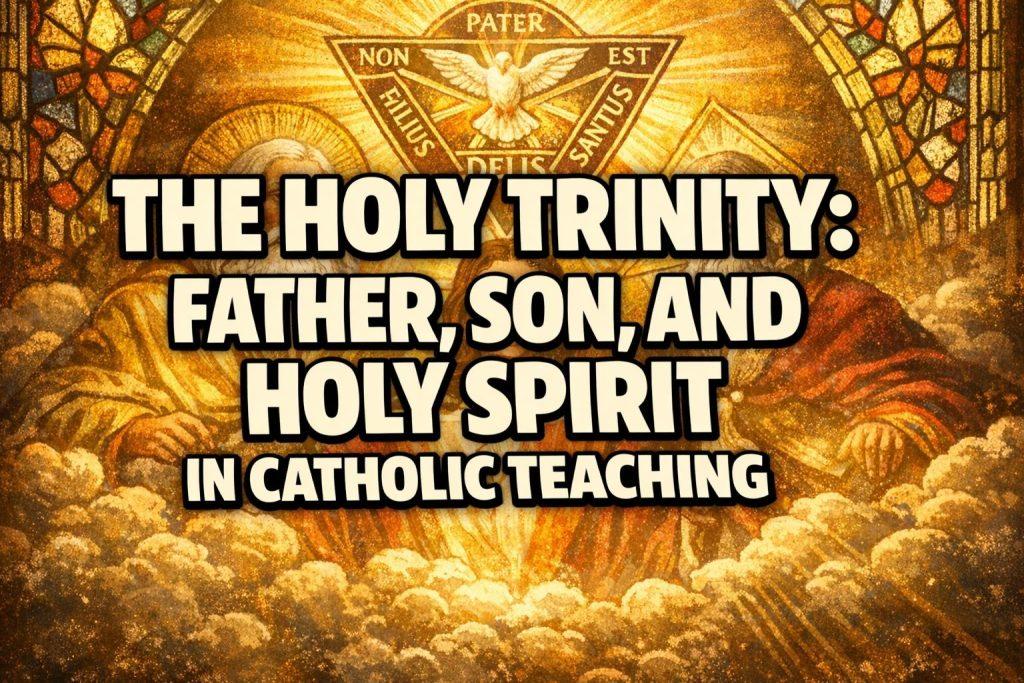
- The Holy Trinity is the central mystery of the Catholic faith, proclaiming that there is one God who exists eternally as three distinct Persons: the Father, the Son, and the Holy Spirit.
- Catholic teaching holds that the three Persons of the Trinity are co-equal, co-eternal, and consubstantial, meaning they share one and the same divine nature without any division or hierarchy of being.
- The doctrine of the Trinity is not a human invention but a revealed truth, meaning God himself disclosed this mystery through the life, words, and actions of Jesus Christ as recorded in Sacred Scripture.
- The Church formally defined Trinitarian doctrine through a series of ecumenical councils, particularly the Councils of Nicaea in 325 AD and Constantinople in 381 AD, which settled key disputes about the nature of Christ and the Holy Spirit.
- Catholics profess belief in the Trinity every time they pray the Sign of the Cross, the Nicene Creed, and the Gloria Patri, making this doctrine inseparable from the daily life of the Church.
- The Trinity is not merely an abstract theological formula but the living source of salvation, since the Father sends the Son to redeem humanity, and the Son sends the Holy Spirit to sanctify the Church.
Introduction
The doctrine of the Holy Trinity stands at the very heart of Catholic Christianity, and it is impossible to understand what the Church believes, how she worships, or why she exists without first grasping this foundational truth. The Catholic Church teaches that God is one in substance yet three in Person, and that this inner life of God is not a puzzle invented by theologians but a revelation granted by God himself to the human family throughout the history of salvation. From the earliest pages of Sacred Scripture to the solemn definitions of ecumenical councils, the Church has consistently affirmed that the Father, the Son, and the Holy Spirit are truly and fully God, not three gods, not three aspects of a single impersonal force, but three distinct Persons who share one divine nature in perfect and eternal unity. This teaching shapes everything in Catholic life: the way Catholics pray, the way they receive the sacraments, the way they understand creation, redemption, and the final destiny of the human soul. The Catechism of the Catholic Church calls the Trinity “the central mystery of Christian faith and life,” and it is the source from which all other Catholic doctrines flow (CCC 234). To know God, in the Catholic understanding, is to know the Father, the Son, and the Holy Spirit as they have revealed themselves through Scripture, Tradition, and the living witness of the Church. For nearly two thousand years, saints, martyrs, theologians, and ordinary believers have confessed this faith with their lips and lived it out in their daily existence. It is a teaching that has been tested, debated, and refined across centuries, and it has emerged from every trial stronger, clearer, and more deeply rooted in the Catholic consciousness. The Trinity is not a barrier to knowing God; it is the very form in which God has chosen to make himself known.
The historical path by which the Church arrived at her precise Trinitarian formulations is one of the most remarkable stories in the history of human thought. From the very beginning, the followers of Jesus Christ recognized that something wholly new had entered the world: a man who forgave sins, accepted worship, rose from the dead, and yet consistently pointed beyond himself to the Father who had sent him and the Spirit he would send. These facts pressed the early Christian communities to ask with increasing urgency who Jesus truly was in relation to God. The answers they gave were not uniform at first, and the diversity of early Christian reflection on God generated significant controversy, particularly in the fourth century when a priest named Arius argued that the Son was a created being, the greatest of all creatures but nonetheless not truly God. The Council of Nicaea in 325 AD, convened by the Emperor Constantine and guided by the Holy Spirit through the bishops of the Church, decisively rejected this view and declared that the Son was “consubstantial” with the Father, meaning of the same divine substance and not merely similar to him. The Council of Constantinople in 381 AD extended this clarity to the Holy Spirit, affirming that the Spirit is also truly divine and truly God. The Athanasian Creed, which emerged in the tradition of Saint Athanasius of Alexandria, one of the greatest defenders of Nicene orthodoxy, articulated the Trinitarian faith with exceptional precision, insisting that the three Persons are neither confused with one another nor separated from each other. Saint Augustine of Hippo devoted fifteen books to the subject in his masterwork “De Trinitate,” arguing that human beings could find faint analogies of the Trinity’s inner life in the structure of the human mind itself, with its capacities for memory, understanding, and will. Saint Thomas Aquinas later systematized Trinitarian theology within his “Summa Theologiae,” drawing on both the Greek and Latin theological traditions to produce a synthesis of extraordinary depth and coherence. The Second Vatican Council, in the Dogmatic Constitution “Lumen Gentium,” reinforced the centrality of Trinitarian faith to the identity and mission of the Church, describing the Church herself as a people made one by the unity of the Father, the Son, and the Holy Spirit. Throughout this long history, the Church’s understanding of the Trinity has deepened not by changing the substance of revelation but by articulating it with ever greater faithfulness and precision, so that each generation might receive the whole truth about God as it was given once and for all in Jesus Christ.
The Nature of the One God
Catholic teaching on the Trinity begins with an uncompromising affirmation of monotheism, the belief that there is one God and one God alone. This conviction comes directly from the inheritance of Israel, to whom God declared through Moses, “Hear, O Israel: The Lord our God, the Lord is one” (Deuteronomy 6:4), a text that Jesus himself cited as the first and greatest commandment. The Catholic Church does not abandon or soften this monotheism; she holds it with the same firmness as the Jewish tradition from which Christianity was born. What the Church adds, through the revelation brought by Jesus Christ, is the stunning disclosure that this one God is not a solitary monad but a communion of Persons, and that the inner life of God is a life of perfect, eternal love shared among three who are distinct yet inseparable. This affirmation does not contradict the oneness of God; it deepens it by showing that divine unity is not the unity of an isolated individual but the unity of a relationship so perfect and so complete that it constitutes a single divine nature. The Catechism teaches that God is “one in substance but three in Persons,” drawing on the terminology developed across centuries of theological reflection (CCC 252). This language is precise and deliberate: “substance” refers to the what of God, the single divine being that is utterly unique, while “Person” refers to the who, the three distinct modes of subsistence within that one divine being. To say that God is one substance is to say that the Father, Son, and Holy Spirit do not each possess a separate portion of divinity, as if divinity were a pie that could be cut into thirds; rather, each Person is fully and entirely God, possessing the whole of the divine nature without division, diminution, or limit. This is why the Church teaches that in worshipping the Father, the Son, or the Holy Spirit, one is worshipping the one God in the fullness of his being, and not a fraction of him.
The divine attributes that Catholic theology ascribes to God, his omnipotence, omniscience, omnipresence, eternality, and perfect goodness, belong equally and fully to each of the three Persons, because all three share the one divine nature completely. This means that there is no sense in which the Father is “more eternal” than the Son, or in which the Holy Spirit is “less powerful” than the Father; such distinctions would imply divisions within the divine nature that Catholic theology firmly rejects. The language of “Father” and “Son” does not imply that the Father existed before the Son, as if the Son had a beginning; the Church insists that the Son is “eternally begotten” of the Father, which means the generation of the Son is not an event in time but an eternal, timeless reality within the inner life of God. Similarly, the Holy Spirit is said to “proceed” from the Father and the Son, not in a temporal sequence but in an eternal and perfect procession that constitutes the Spirit’s distinctive identity as the third Person. Saint Thomas Aquinas described these eternal relations as “subsistent relations,” meaning that what distinguishes the Father from the Son and the Spirit is precisely the relational property each holds within the Godhead: the Father is unbegotten, the Son is eternally begotten of the Father, and the Spirit eternally proceeds from both. These distinctions are real, not merely mental or linguistic conveniences; they are the actual structure of divine life as God has revealed it. The practical implication for Catholic worship and prayer is that one may address the Father, the Son, or the Holy Spirit directly, as distinct Persons with whom a personal relationship is genuinely possible, while never losing sight of the fact that one is always in the presence of the single, undivided God. Catholic liturgy reflects this precision: the doxology “Glory be to the Father, and to the Son, and to the Holy Spirit” addresses three Persons, while the final phrase “as it was in the beginning, is now, and ever shall be” insists on their common eternity and equal majesty. Understanding the unity of God is therefore not a constraint on Trinitarian faith but its very foundation, and the Trinity is the fullest revelation of what that unity truly means.
God the Father: Creator and Source
Within the Holy Trinity, the first Person is the Father, and Catholic teaching presents him as the unoriginated source, the one who is not begotten and from whom both the Son and the Spirit derive their eternal existence within the Godhead. This primacy of the Father is sometimes called the “monarchy of the Father” in classical theology, a term that does not imply superiority of being or dignity but rather denotes the Father as the relational origin within the inner life of God. Jesus consistently spoke of the Father with an intimacy that astonished his contemporaries; he addressed God as “Abba,” an Aramaic term of profound familial closeness, and he taught his disciples to do the same through the Lord’s Prayer, which opens with the words “Our Father, who art in heaven” (Matthew 6:9). The use of “our” in that prayer is itself theologically significant, for it indicates that those who are united to Christ through baptism are invited to share in his own filial relationship with the Father, not by nature as the Son is, but by adoption and grace. Catholic theology describes this as divine filiation or adoptive sonship, the teaching that through sanctifying grace, human beings are truly made children of God and genuine participants in the divine life. The Catechism affirms this truth by citing Saint Paul’s letter to the Romans, where he writes that “you have received the spirit of adoption as sons, by whom we cry, ‘Abba! Father!’” (Romans 8:15), making clear that the Christian’s relationship to the Father is not merely a metaphor but a real, gracious transformation of the soul (CCC 1997). The Father is also confessed in the Nicene Creed as “maker of heaven and earth, of all that is seen and unseen,” identifying him as the first Person through whom the act of creation is appropriated in Catholic theology, though creation is properly the work of the entire Trinity acting as one. This attribution of creation to the Father reflects the principle that external divine actions are common to all three Persons, but they are “appropriated” to one Person or another in order to illuminate the inner relations of the Trinity more clearly.
Catholic theology takes great care to clarify that calling God “Father” does not mean God is literally a male being in the biological sense, for God utterly transcends all categories of created existence, including gender as we understand it in the natural world. The name “Father” is revealed by God himself, particularly through Jesus Christ, and the Church holds it as the proper way to address the first Person of the Trinity because it is the name that Jesus himself used and taught. Saint Thomas Aquinas noted that the name “Father” belongs to God in a way that is primary and most perfect, since human fatherhood itself is only a faint participation in and reflection of the eternal Fatherhood of God, as Saint Paul suggests when he writes that every family “in heaven and on earth” takes its name from the Father (Ephesians 3:15). The fatherhood of God, understood in its full Catholic sense, points not merely to authority or origin but to tenderness, provision, and an infinite concern for the well-being of his children. The parable of the Prodigal Son in Luke 15:11-32 presents perhaps the most vivid portrait of this divine fatherhood in the entire New Testament, depicting a father who runs to meet his returning son, embraces him before a word of apology can be spoken, and celebrates his return with unrestrained joy. This image of God as a Father who seeks the lost, forgives the repentant, and rejoices over the return of sinners captures something essential about the Catholic understanding of who the first Person of the Trinity is and how he relates to his creatures. In the sacramental life of the Church, the fatherhood of God is made concrete and accessible: at baptism, believers are formally adopted as children of the Father; in the Eucharist, they approach the Father’s table as members of his household; and in confession, they experience the same merciful welcome as the prodigal son in the parable. Living with an awareness of God’s fatherhood transforms the entire Christian life, giving every prayer, every act of charity, and every moment of suffering a context of personal relationship with the God who holds all things in existence.
God the Son: Eternal Word Made Flesh
The second Person of the Holy Trinity, the Son, holds a unique and absolutely central place in Catholic theology because it is the Son who, in the fullness of time, became a human being in the person of Jesus of Nazareth. This event, known as the Incarnation, meaning the act of taking on flesh, is the pivot of all human history in Catholic understanding, for it is the moment when the eternal God personally entered the created order to accomplish the redemption of humanity from within it. The Gospel of John opens with a prologue that presents the Son under the title of the “Word,” or in Greek “Logos,” identifying Jesus not merely as a wise teacher or a holy man but as the eternal Word who “was with God” and “was God” from the very beginning (John 1:1). This identification of the Son with the divine Word was enormously significant in the early Church, as it connected the Christian understanding of Jesus to the Jewish tradition of God’s creative and revelatory activity while also making clear that the Son’s divine identity was not a status conferred upon him at some point but his eternal and uncreated reality. When John then writes that “the Word became flesh and dwelt among us” (John 1:14), he announces the Incarnation in terms of the most radical nearness imaginable: God did not send a message or a symbol but his own Son, his own eternal Word, into the vulnerability and fragility of human life. The Council of Nicaea in 325 AD crystallized this teaching by defining the Son as “consubstantial” with the Father, using the Greek word “homoousios” to insist that the Son shares the identical divine nature and is not merely similar to the Father or a secondary divine being. The Council of Chalcedon in 451 AD further defined that in Jesus Christ, the Son of God, two complete and perfect natures, one divine and one human, exist together without confusion, change, division, or separation, united in the single Person of the Son. This precise and carefully worded definition protected the mystery of Christ from two recurring errors: those who would make Jesus so divine that his humanity becomes a mere appearance, and those who would make him so human that his divinity becomes a mere quality or title conferred from outside.
The ministry, death, and resurrection of Jesus constitute the supreme act of Trinitarian love toward the human race, and Catholic theology understands every aspect of Jesus’s life as an expression of his eternal relationship with the Father. When Jesus prays in the Garden of Gethsemane, “Father, not my will, but yours, be done” (Luke 22:42), he reveals from within the drama of human suffering the eternal disposition of the Son toward the Father: a perfect, free, and loving obedience born not of compulsion but of relationship. When Jesus breathes his last on the cross and the Letter to the Hebrews tells us he “offered himself without blemish to God through the eternal Spirit” (Hebrews 9:14), the entire Trinity is present in the act of redemption: the Father who gives his Son, the Son who offers himself, and the Spirit through whom the offering is made. The resurrection of Jesus from the dead is, in Catholic understanding, the Father’s vindication of the Son and the definitive revelation that death does not have the last word over God or over those who are united to him. Saint Paul writes in his letter to the Romans that Jesus “was declared to be the Son of God in power according to the Spirit of holiness by his resurrection from the dead” (Romans 1:4), showing that the resurrection is not merely a miraculous event but a Trinitarian proclamation. The Catholic Church teaches that the risen and glorified Christ now intercedes for humanity at the right hand of the Father (Romans 8:34), and that he will come again at the end of history to judge the living and the dead, as the Nicene Creed proclaims. In the meantime, Christ is truly present in the Church he founded: in the Scriptures, in the sacraments, in the community of believers, and above all in the Eucharist, where the Catholic Church teaches that his body, blood, soul, and divinity are truly, really, and substantially present under the appearances of bread and wine. The Catholic’s relationship with the Son is therefore not merely historical or intellectual; it is a living, personal, and sacramental encounter that begins in baptism and reaches its fullest expression at the Eucharistic table.
God the Holy Spirit: Lord and Giver of Life
The third Person of the Trinity, the Holy Spirit, is confessed in the Nicene Creed as “the Lord, the giver of life, who proceeds from the Father and the Son, who together with the Father and the Son is adored and glorified.” This creedal formulation, refined and defended through centuries of theological struggle, captures the essential Catholic understanding of the Spirit as truly and fully divine, co-equal in all respects with the Father and the Son, and active in a distinctive way in the life of the Church and the souls of believers. The Holy Spirit is, in the striking phrase of the Catechism, the “interior Master” of Christian life, the one who leads believers into all truth, empowers them for holiness, and unites them to Christ and to one another in the Body of the Church (CCC 687). Jesus himself promised the gift of the Spirit to his disciples on the night before his death, saying, “I will ask the Father, and he will give you another Advocate, to be with you forever. This is the Spirit of truth” (John 14:16-17). The word “Advocate” in the original Greek is “Paraclete,” meaning one who stands alongside, defends, comforts, and intercedes, and it describes the Spirit’s role in the Christian life with beautiful precision. The promise was fulfilled at Pentecost, described in the Acts of the Apostles, when “a sound like a rushing wind” filled the house where the disciples were gathered and “tongues as of fire” rested upon each of them, and they were “filled with the Holy Spirit and began to speak in other tongues as the Spirit gave them utterance” (Acts 2:2-4). This event, which the Church celebrates as her birthday, marks the beginning of the Spirit’s visible and public mission in the world, empowering the apostles to proclaim the Gospel fearlessly and gathering from every nation a new people united in faith, hope, and love.
The theological tradition of the Catholic Church has reflected deeply on the distinctive identity of the Holy Spirit within the Trinity, and it is in this reflection that one of the most important debates in Church history took shape. The Nicene Creed as promulgated at the Council of Constantinople in 381 AD states that the Spirit “proceeds from the Father.” The Western Church, following the theological development of Saint Augustine and others, added the word “Filioque,” a Latin term meaning “and from the Son,” so that the Western creed reads that the Spirit “proceeds from the Father and the Son.” This addition was eventually inserted into the creed throughout the Western Church and became a major point of contention with the Eastern Orthodox Churches, contributing to the Great Schism of 1054 AD. The Catholic Church maintains that the Filioque accurately expresses the truth of the Spirit’s eternal procession within the inner life of God, pointing to the eternal communion between the Father and the Son from which the Spirit proceeds as their mutual love made subsistent. Saint Thomas Aquinas argued that the Spirit proceeds as the eternal love of the Father and the Son for each other, giving the Spirit a distinctive relational identity within the Godhead as the bond and expression of divine love. Whatever the ecumenical complexities surrounding the Filioque controversy, the Catholic Church’s understanding of the Holy Spirit is one of active, personal, and transforming divine presence: the Spirit who hovered over the waters at creation (Genesis 1:2), who spoke through the prophets, who overshadowed the Virgin Mary at the Annunciation (Luke 1:35), and who now dwells in the souls of the baptized as in a living temple (1 Corinthians 3:16). The sevenfold gifts of the Holy Spirit, wisdom, understanding, counsel, fortitude, knowledge, piety, and fear of the Lord, which the Catholic tradition draws from the prophecy of Isaiah (Isaiah 11:2-3), equip believers for a life of holiness and service. In the sacrament of Confirmation, Catholics receive the fullness of the Holy Spirit in a way that strengthens and deepens what was given at baptism, equipping them as mature soldiers and witnesses of Christ in the world.
The Trinity in Scripture: Old and New Testament Foundations
One of the most common questions about Trinitarian doctrine is whether it can genuinely be found in the Bible or whether it is simply the invention of later theologians and councils. The Catholic Church firmly holds that the Trinity is a revealed doctrine, meaning it is disclosed by God in Sacred Scripture and Sacred Tradition, not derived by human reasoning alone. The Old Testament, while not making the threefold nature of God explicitly clear in the way that the New Testament does, contains numerous passages that the Church Fathers and Catholic theologians have consistently read as anticipations or pre-figurements of Trinitarian revelation. The creation account in Genesis begins with God’s Spirit hovering over the waters and God speaking his creative Word, offering what many theologians see as a foreshadowing of the three Persons active in the work of creation (Genesis 1:1-2). The divine name “Elohim” used throughout the Old Testament is grammatically plural in Hebrew, and while this does not by itself prove the Trinity, the Church has seen in it a hint of the divine plurality that the New Testament would later make explicit. The mysterious visitation of three strangers to Abraham at Mamre in Genesis 18:1-3, where the text moves between referring to the visitors as three men and as the Lord speaking, has been interpreted by many Church Fathers, including Saint Augustine, as a pre-figurement of the Trinity, and Andrei Rublev’s famous icon of the Trinity depicts this scene with profound theological artistry. The prophet Isaiah records a vision in which he hears the seraphim crying “Holy, holy, holy is the Lord of hosts” (Isaiah 6:3), and the triple repetition of “holy” has been understood by the Church from ancient times as an intimation of the three divine Persons, though the fullness of this mystery awaited the New Testament for its clearest revelation. God’s word in Proverbs 8:22-31, where Wisdom speaks of being “beside him like a master workman” at the creation of the world, provided early Christian thinkers with a rich resource for reflecting on the eternal generation of the Son as the divine Wisdom present with the Father from before all ages.
The New Testament provides the clearest and most direct Scriptural basis for Trinitarian faith, and the Catholic Church grounds her doctrine primarily in its testimony. The account of Jesus’s baptism in the Jordan River presents all three Persons simultaneously in one of the most vivid Trinitarian scenes in the entire Bible: the Son is baptized, the Spirit descends upon him in the form of a dove, and the Father’s voice is heard from heaven saying, “This is my beloved Son, with whom I am well pleased” (Matthew 3:16-17). This scene alone has been called the “Epiphany of the Trinity” by many theologians, for it places the three Persons in distinct and recognizable roles within a single historical event. Jesus’s final commission to his disciples in the closing verses of Matthew’s Gospel is explicitly Trinitarian in its formula: “Go therefore and make disciples of all nations, baptizing them in the name of the Father and of the Son and of the Holy Spirit” (Matthew 28:19), and this baptismal formula remains in use in the Church to this day, making every celebration of the sacrament of baptism a confession of faith in the Trinity. Saint Paul’s letters contain numerous Trinitarian formulations, perhaps the most celebrated being the closing blessing of his second letter to the Corinthians: “The grace of the Lord Jesus Christ and the love of God and the fellowship of the Holy Spirit be with you all” (2 Corinthians 13:14). The Gospel of John is particularly rich in Trinitarian teaching, presenting the extended discourses of Jesus in which he speaks at length about his relationship with the Father and his promise of the Holy Spirit. Jesus declares in that Gospel, “I and the Father are one” (John 10:30), a statement that prompted the religious leaders of his time to accuse him of blasphemy, and which the Church reads as a clear assertion of his divine identity. The Letter to the Hebrews opens with the majestic affirmation that the Son is “the radiance of the glory of God and the exact imprint of his nature” (Hebrews 1:3), a passage that became foundational in the Church’s reflection on the Son’s consubstantiality with the Father. Taking the New Testament as a whole, the Catholic Church holds that Trinitarian faith is not an imposition upon the text but the most faithful reading of what the text itself presents: a God who is Father, Son, and Holy Spirit, distinct in Person yet one in being and inseparable in love and action.
The Trinity in the Life of the Church
The doctrine of the Holy Trinity is not confined to theology textbooks or council decrees; it shapes and structures the entire sacramental, liturgical, and spiritual life of the Catholic Church in ways that touch every believer’s daily existence. The most elementary Catholic prayer, the Sign of the Cross, is an explicit invocation of the Trinity: “In the name of the Father, and of the Son, and of the Holy Spirit.” This prayer opens and closes the Mass, the Divine Office, the Rosary, and virtually every Catholic devotional practice, making Trinitarian faith the breath of Catholic prayer rather than a distant doctrinal abstraction. The seven sacraments of the Church are all administered in the name of the Trinity or with explicit reference to the three Persons: baptism uses the Trinitarian formula directly, Confirmation is the reception of the Holy Spirit, the Eucharist is the sacrifice of the Son offered to the Father through the Spirit, and so on throughout the sacramental system. The liturgical year itself reflects the Trinitarian economy of salvation, unfolding through Advent and Christmas, which celebrate the Incarnation of the Son; through Lent, Holy Week, and Easter, which celebrate his redemptive death and resurrection; through Pentecost, which celebrates the gift of the Holy Spirit; and culminating in Ordinary Time, in which the Church lives out the grace received from all three Persons in the ongoing work of sanctification. The Catechism teaches that the whole of Christian life is a participation in the divine life of the Trinity and that the ultimate goal of human existence is to share fully in that Trinitarian communion in the joy of heaven (CCC 260). Every act of charity that a Catholic performs in daily life, helping a neighbor in need, forgiving a personal wrong, praying for an enemy, is therefore a participation in the love that flows eternally among the three Persons, making even ordinary life a form of Trinitarian worship.
Catholic spirituality has developed a rich tradition of meditating on the three Persons individually as a way of deepening one’s relationship with God. Devotion to God the Father characterizes the prayer of abandonment and trust, the attitude of the child who rests in the Father’s providence. Devotion to the Son takes the form of contemplating the mysteries of his Incarnation and his saving acts, particularly through the Rosary and the Stations of the Cross. Devotion to the Holy Spirit, especially prominent in the charismatic renewal within the Catholic Church, focuses on openness to the Spirit’s gifts, fruits, and movements in the soul. Saint Louis de Montfort, in his treatise “True Devotion to Mary,” argued that Mary herself is the privileged path to the Holy Trinity, for she is the daughter of the Father, the mother of the Son, and the spouse of the Holy Spirit, making her the human person who stands in the most intimate created relationship to all three Persons. The mystical tradition of the Church, represented by figures such as Saint John of the Cross and Saint Teresa of Avila, speaks of the summit of the contemplative life as a direct and experiential awareness of the Trinity dwelling in the soul, described in the theological language of the “indwelling of the Trinity,” a reality that the Catechism affirms as a genuine dimension of the grace received at baptism (CCC 1997). Saint Patrick, according to tradition, used the three-leafed shamrock to explain the Trinity to the people of Ireland, illustrating how great teachers of the faith have always sought accessible analogies to help ordinary people grasp this most profound of mysteries. While no analogy captures the mystery perfectly, since God always exceeds every human image or comparison, the search for analogies reflects the Church’s conviction that the Trinity is not meant to be a barrier between God and humanity but the very form of God’s loving self-disclosure to the world.
Heretical Views and the Church’s Response
The history of Trinitarian doctrine is, in large part, a history of the Church recognizing, naming, and refuting errors that would distort the truth about who God is. Understanding these errors and the Church’s responses to them helps illuminate what Catholic teaching actually affirms, since the precise language of the creeds was often forged in direct response to specific misunderstandings. The most significant heresy in the history of Trinitarian thought is Arianism, the teaching of the fourth-century Alexandrian priest Arius, who argued that the Son was the first and greatest of all created beings but was not truly God, since only the Father was unbegotten and eternal. Arius summarized his position with the memorable phrase “there was when he was not,” asserting that the Son had a beginning in time and was therefore a creature, however exalted. The Council of Nicaea in 325 AD rejected Arianism absolutely, declaring the Son to be “consubstantial” with the Father and condemning anyone who taught that the Son was created or had a beginning. Saint Athanasius of Alexandria, whose name became synonymous with orthodox Trinitarian faith through the Latin phrase “Athanasius contra mundum” (Athanasius against the world), spent much of his long episcopal career in exile, repeatedly deposed by emperors sympathetic to Arian positions, but he never wavered from the Nicene definition. The struggle against Arianism lasted far longer than the council itself; Arian Christianity survived and spread among the Germanic peoples, and it was not until the conversion of the Franks under Clovis in 496 AD and the subsequent conversion of the Visigoths that Arianism was finally displaced in Western Europe. Modalism, sometimes called Sabellianism after the third-century theologian Sabellius, proposed an error in the opposite direction from Arianism: where Arianism separated the three Persons too sharply, modalism collapsed them together, teaching that Father, Son, and Spirit were not genuinely distinct Persons but merely three successive modes or masks through which the one God revealed himself at different moments in history, as an actor might wear three different masks in a play.
Beyond Arianism and modalism, the Church confronted a range of other Trinitarian distortions throughout the patristic era and beyond. Macedonianism, also known as Pneumatomachianism (meaning “fighters against the Spirit”), accepted the full divinity of the Son as defined at Nicaea but denied the full divinity of the Holy Spirit, treating the Spirit as a created or intermediate being rather than a divine Person co-equal with the Father and the Son. The Council of Constantinople in 381 AD addressed this error directly, expanding the Nicene Creed with the full confession of the Spirit’s divinity as the “Lord and giver of life” who “proceeds from the Father” and who “together with the Father and the Son is adored and glorified.” Tritheism, the error of treating the three Persons as three separate gods, has recurred in various forms and continues to confuse some popular presentations of the Trinity today; it fails to honor the absolute unity of the divine substance that Catholic faith insists upon. The Jehovah’s Witnesses, founded in the nineteenth century, hold a position that closely resembles ancient Arianism, teaching that Jesus is a created being, “a god” but not the Almighty God, and that the Holy Spirit is an impersonal force rather than a divine Person; the Catholic Church identifies this as a departure from the faith once delivered to the saints. Unitarianism, which arose in the context of the Protestant Reformation but has roots in much earlier rationalist theologies, denies the Trinity entirely and affirms God as a single undivided unity with no inner Persons, treating the divinity of Christ as a theological error. Against all of these distortions, the Catholic Church maintains the fullness of the Trinitarian faith as defined by the ecumenical councils, insisting that this faith is not a human construct but the very truth about God as he has revealed himself, and that to reduce, flatten, or distort the Trinity is ultimately to lose the God of the Gospel and to substitute a lesser god of human invention. The Church’s patience and persistence in defining and defending Trinitarian faith across fifteen centuries of controversy is itself a testimony to her conviction that this truth matters eternally, for what we believe about God shapes everything else we believe about ourselves, the world, and the meaning of human life.
See Also
- The Nicene Creed: Catholic Faith in a Single Profession
- The Incarnation: Why the Son of God Became Man
- The Holy Spirit and the Gifts of God in Catholic Teaching
- Baptism: Entry into the Life of the Trinity
- The Filioque Controversy: East and West on the Holy Spirit
- The Council of Nicaea and the Defense of Christ’s Divinity
- Divine Revelation: How God Makes Himself Known to Humanity
- The Indwelling of God: The Trinity and the Life of Grace
What This Teaching Means for Catholics Today
The doctrine of the Holy Trinity is not a relic of ancient theological disputes or a formula to be memorized and set aside; it is the living heartbeat of the Catholic faith, and understanding it even a little more deeply can transform the way a person prays, relates to others, and understands the meaning of their own life. Every time a Catholic makes the Sign of the Cross, that simple gesture is a confession that God is not alone, that the God who created us and redeemed us and sanctifies us is a God of relationship, a God whose innermost life is an eternal exchange of love among three Persons. This means that love is not merely something God occasionally does but is what God essentially and eternally is, as the First Letter of John proclaims with breathtaking simplicity: “God is love” (1 John 4:8). Because God is Trinitarian love, human beings, made in the image and likeness of God (Genesis 1:26-27), are made for relationship, for community, and for love as the core structure of their existence. This is why the Church consistently teaches that isolation, loneliness, and individualism are not natural human states but distortions of the social and relational nature that God has written into the human heart. Marriage, family, friendship, parish community, and the universal solidarity of the human race all find their deepest theological foundation in the Trinitarian nature of God, in the truth that at the source of all reality there is not a solitary self but a communion of Persons who exist for and through one another in perfect love. Pope John Paul II, in his apostolic exhortation “Familiaris Consortio,” drew this connection explicitly, arguing that the family, as a community of persons united in love, is called to be an image and reflection of the communion of the Trinity, and that understanding the family in Trinitarian terms elevates the dignity of every member and every relationship within it.
Catholics who wish to live more deeply in the light of Trinitarian faith have practical and accessible paths available to them within the ordinary life of the Church. Regular participation in the Mass is the most fundamental of these paths, since the Eucharistic liturgy is structurally Trinitarian from beginning to end: the entire prayer of the Mass is directed to the Father, through the Son, in the Holy Spirit, and the central prayer of the liturgy, the Eucharistic Prayer, makes this Trinitarian structure explicit in every line. Spending time in prayer with each of the three Persons individually, speaking to the Father as a child speaks to a loving parent, meditating on the life and words of Jesus in the Gospels, and opening oneself to the quiet movements of the Holy Spirit in times of stillness and silence, can gradually develop a richer and more personal sense of the Trinity’s presence in one’s life. The Church’s tradition of praying the Gloria Patri (Glory Be) frequently throughout the day, inserting it between the decades of the Rosary and at the end of each psalm in the Liturgy of the Hours, is a simple way of turning the mind and heart back to the Trinity repeatedly across the hours of each day. For Catholics who feel called to deeper study, the works of Saint Augustine, particularly “De Trinitate,” and the relevant sections of the “Summa Theologiae” of Saint Thomas Aquinas offer inexhaustible resources for theological reflection, and the relevant sections of the Catechism of the Catholic Church (CCC 232-267) provide a clear and accessible summary of the Church’s official teaching for those who want a solid starting point. Living the Trinitarian faith fully means allowing the truth that God is love to reshape every relationship, every decision, and every moment of the day, so that one’s entire life becomes, as Saint Paul described his own, a life “hidden with Christ in God” (Colossians 3:3). The mystery of the Holy Trinity will never be fully comprehended by the human mind in this life, for it infinitely exceeds every finite capacity; yet the Church assures her children that this mystery is not a darkness that excludes but a light that draws every soul deeper into the inexhaustible joy of knowing and being known by the God who is Father, Son, and Holy Spirit.
About This Article
CatholicWiki is an unofficial, independently maintained Catholic encyclopedia. It is not affiliated with, endorsed by, or representative of the Holy See, the Vatican, any diocese, any Catholic religious order, or any official body of the Catholic Church. While every effort is made to ensure that all content faithfully reflects Catholic teaching as expressed in Sacred Scripture, Sacred Tradition, the Magisterium, and other authoritative Catholic sources, readers are encouraged to consult official Church documents, their local pastor, or a qualified theologian for matters of personal faith and practice. CatholicWiki is committed to accuracy, fidelity, and continuous improvement. If you believe any content on this page contains an error, please consider contributing a correction in the spirit of truth and charity.