
Quick Insights
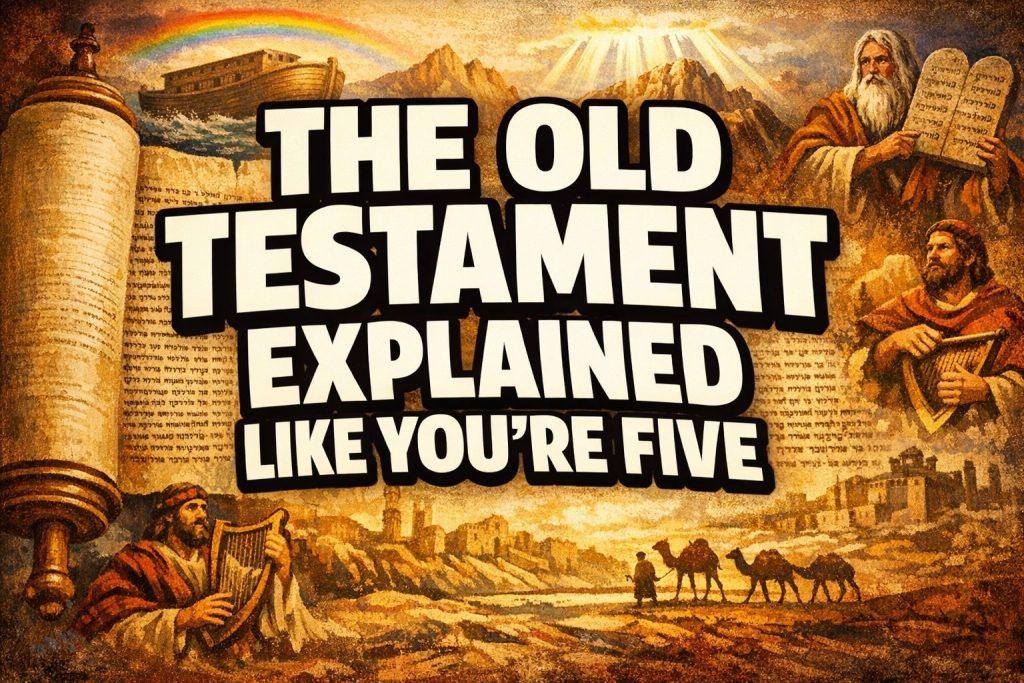
- The Old Testament is the first and larger part of the Bible, and it tells the story of how God made the world, chose a special people, and promised to send a Savior.
- It contains 46 books in the Catholic Bible, written over many centuries by different authors who were inspired by God the Holy Spirit.
- The Old Testament begins with the creation of everything by God and follows His loving relationship with humanity even after people turned away from Him through sin.
- God chose a man named Abraham and his descendants, the people of Israel, to be the family through which He would eventually bring salvation to the whole world.
- The Law that God gave to Moses, including the Ten Commandments, taught the people of Israel how to live in right relationship with God and with one another.
- Every important person, event, and promise in the Old Testament points forward to Jesus Christ, who fulfills all of it in a way that far exceeds what anyone could have imagined.
What the Old Testament Is
The Old Testament is the first and foundational portion of Sacred Scripture, the written Word of God that the Catholic Church receives as divinely inspired and authoritative for faith and life. It comprises 46 books in the Catholic canon, meaning the authoritative list of Scripture recognized by the Church, which is seven books more than the Protestant Old Testament because the Catholic Church maintains the broader canon recognized by the early Church from its Greek translation of the Hebrew Scriptures, known as the Septuagint. These additional books, sometimes called the deuterocanonical books, meaning “second canon,” include Tobit, Judith, First and Second Maccabees, Wisdom, Sirach, and Baruch, along with additions to Daniel and Esther. The Catechism of the Catholic Church teaches that the Old Testament is an indispensable part of Sacred Scripture and that its books are divinely inspired and retain permanent value, since the old covenant was never revoked (CCC 121). The word “testament” means covenant, a solemn bond of love and commitment between parties, and the Old Testament tells the story of the covenants God made with His people over the course of many centuries, from the covenant with Noah after the flood to the covenant with Abraham, the covenant at Sinai with Moses, and the covenant with David. These covenants are not merely contractual arrangements or ancient legal agreements. They are expressions of a love that God freely chose to extend to human beings who repeatedly failed to live up to what that love called forth from them. Reading the Old Testament requires patience, attentiveness, and a willingness to sit with stories, laws, poems, and prophecies that sometimes seem remote from ordinary modern experience but that carry within them layers of theological meaning that the Church has been mining for two thousand years without exhausting their riches.
How the Old Testament Relates to the New
Understanding the Old Testament correctly requires grasping the fundamental principle that it is ordered toward the New Testament as its fulfillment and completion. The great fourth-century Biblical scholar Saint Augustine expressed this relationship in a phrase that has become one of the most quoted formulas in Catholic theology: “The New Testament lies hidden in the Old, and the Old is made plain in the New.” This principle of reciprocal illumination means that neither Testament can be read in true depth without constant reference to the other. Jesus Himself insists on this connection repeatedly throughout the Gospels. After His Resurrection, walking with the two disciples on the road to Emmaus, He “interpreted to them in all the Scriptures the things concerning himself” (Luke 24:27), showing that the entire Old Testament is ultimately about Him. The Catechism teaches that Christians read the Old Testament in the light of Christ crucified and risen, and that the Old Testament acquires and shows forth its full meaning in the New Testament, while the New Testament sheds light on the Old and illuminates it (CCC 129). This does not mean the Old Testament is merely a preface to be skimmed before getting to the “real” content of the New. It means the Old Testament has its own profound and permanent value while simultaneously carrying within it a forward-pointing energy that finds its destination in Jesus. Every great theme of the New Testament, grace, covenant, sacrifice, priesthood, kingship, prophecy, and the presence of God among His people, draws its meaning from the Old Testament background that shaped the mind of Jesus, His apostles, and the first Christians. A Catholic who reads the Old Testament with faith, attentiveness, and an awareness of its Christological meaning, meaning its orientation toward Christ, will find it to be an inexhaustible source of nourishment for the spiritual life.
Creation — In the Beginning God Made Everything
The Old Testament opens with one of the most theologically rich texts in all of Sacred Scripture, the account of creation in the opening chapters of Genesis, and the Catholic Church has always read these chapters as a profound theological statement about God, the world, and the human person rather than as a scientific description of the physical process by which the universe came to be. The first creation account in Genesis chapter one presents God creating in an orderly and purposeful sequence over six days and resting on the seventh, and its repeated refrain “and God saw that it was good” communicates the fundamental Catholic conviction that the physical world is genuinely good, that matter is not evil or inferior, and that creation reflects the goodness and wisdom of its Maker. The creation of human beings occupies the climax of this account: “So God created man in his own image, in the image of God he created him; male and female he created them” (Genesis 1:27). The teaching that human beings are made in the image and likeness of God, what the tradition calls the “imago Dei,” meaning image of God, is the most important anthropological statement in the entire Old Testament, and it grounds the entire Catholic understanding of human dignity, human rights, and the moral life. The Catechism teaches that among all visible creatures, only the human person is capable of knowing and loving God, is called to share in God’s own life, and is the only creature God has willed for its own sake (CCC 356). The second creation account in Genesis chapter two provides a more intimate and personal picture of God’s creative work, showing Him forming the human person from the dust of the earth and breathing life into him, and then creating woman from the side of man as a partner equal in dignity and complementary in nature. Together these two accounts teach that marriage, work, rest, and the human relationship with the natural world are all part of God’s original plan and carry a goodness and dignity that sin distorts but cannot destroy.
The Fall — How Sin Entered the World
The third chapter of Genesis tells the story of what the Catholic tradition calls the Fall, the moment when the first human beings chose to disobey God and thereby introduced sin, suffering, and death into a creation that God had made good. The narrative centers on a serpent who tempts the woman with the promise that eating the forbidden fruit will make her “like God, knowing good and evil” (Genesis 3:5). The temptation is essentially the temptation to claim for oneself the authority to determine what is good and what is evil, to replace God’s judgment with human judgment, and to treat the creature’s autonomy as if it were the supreme value rather than the creature’s loving relationship with the Creator. When the woman and then the man eat the fruit, the immediate consequences are shame, broken intimacy with God, blame and conflict between the man and the woman, and ultimately death and expulsion from the Garden. The Catechism teaches that this event, which the tradition calls “original sin,” is a sin committed by the historical first human beings that affects the entire human race, not because every person personally imitates the first sin, but because every human being is born into a state in which the original grace and harmony of creation has been disrupted (CCC 388). Original sin is not primarily a moral failing inherited like a bad habit. It is a wounded state of human nature in which the will is weakened, the intellect is darkened, the passions are disordered, and the person is subject to suffering and death in ways that were not part of God’s original intention. The Catechism also notes that the account of the Fall in Genesis contains the first hint of what would later be called the Protoevangelium, meaning the “first Gospel”: God tells the serpent that He will put enmity between it and the woman and between its offspring and hers, and that her offspring will crush the serpent’s head (Genesis 3:15), a promise the Church reads as the earliest prophecy of the Messiah and of Mary.
Noah and the Flood — God’s Promise to All Creation
The story of Noah and the flood, found in Genesis chapters six through nine, is one of the best-known narratives in the entire Bible, and its theological significance extends far beyond the familiar image of animals gathered two by two into an ark. The flood narrative presents the catastrophic consequences of sin spreading through humanity until God sees that “every intention of the thoughts of his heart was only evil continually” (Genesis 6:5), a judgment that sets the stage for the flood as a kind of cosmic reset. Noah, described as a righteous man who walked with God, receives the divine instruction to build the ark, and his obedient faithfulness in the face of an utterly improbable command becomes a model for the kind of trusting obedience that characterizes the relationship God desires with every human being. After the flood waters recede and Noah and his family emerge from the ark, God establishes a covenant with Noah and, through him, with all of humanity and with every living creature on the earth. The sign of this covenant is the rainbow, and God’s promise is that He will never again destroy the earth with a flood. The Catechism notes that this covenant with Noah represents a stage in God’s progressive plan of salvation, an extension of His faithful love to cover not just one people but all of humanity and the whole created order (CCC 71). Saint Peter, writing in his first letter, draws an explicit typological connection, meaning a connection in which an Old Testament reality foreshadows a New Testament reality, between the waters of the flood and the waters of baptism, seeing Noah’s salvation through water as a prefiguring of the salvation that baptism accomplishes through the death and Resurrection of Christ (1 Peter 3:20-21). The story of Noah is therefore not merely an ancient tale about a boat and animals. It is a chapter in the long story of God’s relentless pursuit of humanity’s salvation.
Abraham — The Father of Faith
The call of Abraham in Genesis chapter twelve marks one of the most decisive turning points in the entire history of salvation, because it is the moment when God chooses a specific man and a specific family as the instruments through whom He will work out His plan for the redemption of all humanity. God speaks to Abram, as he is first called, with a command and a promise: “Go from your country and your kindred and your father’s house to the land that I will show you. And I will make of you a great nation, and I will bless you and make your name great, so that you will be a blessing” (Genesis 12:1-2). Abram’s response is simple and total: he goes, as the Lord has told him, without being given detailed information about where he is going or how the promises will be fulfilled. The Letter to the Hebrews holds up this act of trusting obedience as the defining model of faith: “By faith Abraham obeyed when he was called to go out to a place that he was to receive as an inheritance. And he went out, not knowing where he was going” (Hebrews 11:8). God later changes Abram’s name to Abraham, meaning “father of a multitude,” and establishes a formal covenant with him, promising that his descendants will be as numerous as the stars and that through his offspring all the nations of the earth will be blessed (Genesis 22:18). The Catholic Church reads this promise as the first clear articulation of the universal scope of salvation, the announcement that God’s plan encompasses not just one people but every people on earth, and that it will be fulfilled through a specific descendant of Abraham who is Jesus Christ. The supreme test of Abraham’s faith comes when God asks him to sacrifice his only son Isaac, a test that Abraham passes by trusting completely in God’s faithfulness; the Church reads this entire episode as a foreshadowing of the Father’s offering of His own Son on the cross.
Moses and the Exodus — Liberation and the Law
The Exodus, the great liberation of the Israelite people from slavery in Egypt under the leadership of Moses, is the central event of the entire Old Testament and the foundational experience through which Israel came to know God. God reveals Himself to Moses in the burning bush, identifies Himself as the God of Abraham, Isaac, and Jacob, discloses His sacred name, and commissions Moses to lead His people out of their bondage. The ten plagues that precede the departure, culminating in the death of the firstborn sons of Egypt on the night of the Passover, are not simply acts of divine power. They are theological judgments against the false gods of Egypt, demonstrations that the God of Israel holds sovereignty over every force and power that human beings have ever been tempted to treat as divine. The Passover meal itself, in which each Israelite household sacrifices a lamb and marks its doorposts with the blood so that the angel of death passes over their homes, becomes the central ritual of Israel’s liturgical calendar and the most important prefiguring of the Eucharist in the entire Old Testament. The Catechism teaches that the Passover of the Old Testament was a figure of the Passover of Christ, and that the blood of the Passover lamb, which saved Israel from death, foreshadows the Blood of Christ that saves all humanity from the death of sin (CCC 1340). After the crossing of the Red Sea, God brings Israel to Mount Sinai, where He enters into formal covenant with the whole people and gives them the Law through Moses. The Ten Commandments, given at Sinai and recorded in Exodus chapter twenty, express the fundamental moral requirements of living in relationship with the holy God and with other human beings made in His image, and the Catechism treats them as the foundation of the Catholic moral life (CCC 2056).
The Ten Commandments — God’s Moral Teaching for His People
The Ten Commandments hold a central place in the moral teaching of the Catholic Church, and their origin in the covenant at Sinai gives them a context that transforms them from a list of prohibitions into a description of what it looks like to live in right relationship with God and neighbor. The first three commandments concern the relationship between Israel and God: worship no other gods, make no idols, and do not take the name of God in vain. These three commandments protect the absolute priority of God in human life and establish that nothing else in the created order, no power, no pleasure, no possession, and no person, deserves the total loyalty and devotion that belong to God alone. The third commandment, to keep holy the Sabbath day, builds a rhythm of rest and worship into the very structure of human time, insisting that human beings are not made for endless labor and that regular attention to God is not a luxury but a necessity of genuinely human life. The remaining seven commandments govern the relationship between human beings: honor your father and mother, do not kill, do not commit adultery, do not steal, do not bear false witness, do not covet your neighbor’s wife, do not covet your neighbor’s goods. Together these seven commandments protect the basic goods that make human community possible: life, marriage, property, reputation, and the interior freedom from disordered desire that allows a person to respect others genuinely rather than merely tolerating them. The Catechism teaches that the Decalogue, meaning the Ten Commandments, represents a privileged expression of the natural law, meaning the moral truth inscribed by God in every human conscience, and that it remains permanently binding on all human beings as the fundamental moral framework of the covenant (CCC 2070). Jesus does not abolish the commandments but fulfills them by revealing their deepest intention, which is always love of God and love of neighbor.
The Psalms — The Prayer Book of Israel
The Book of Psalms is perhaps the most personally beloved of all the books in the Old Testament, and its 150 poems and songs have shaped the prayer life of the Jewish people and the Catholic Church for more than two thousand years. The Psalms cover the full range of human experience before God: they shout praise and express exultant joy, they cry out in anguish and confusion, they beg for forgiveness, they give thanks for deliverance, they meditate on the Law, they lament the suffering of the innocent, and they trust in God’s faithfulness when all human evidence seems to point the other way. The opening words of Psalm 22, “My God, my God, why have you forsaken me?” (Psalm 22:1), become the cry of Jesus from the cross (Matthew 27:46), showing how the Psalms not only express the prayer of Israel but anticipate and give voice to the prayer of the Messiah Himself. Psalm 110, “The LORD said to my Lord: Sit at my right hand” (Psalm 110:1), is the most frequently quoted Old Testament text in the entire New Testament, used repeatedly to describe the glorification of the risen Jesus at the Father’s right hand. The 23rd Psalm, with its image of God as the good shepherd who leads His flock beside still waters and through the valley of the shadow of death, has comforted countless people in their most difficult moments and finds its fulfillment in Jesus’ declaration that He is the Good Shepherd who lays down His life for His sheep (John 10:11). The Catholic Church prays the Psalms daily in the Liturgy of the Hours, the official daily prayer of the Church, fulfilling the ancient Jewish practice of praying the Psalms throughout the day. The Catechism teaches that the Psalms are both the prayer of the whole assembled people of Israel and the prayer of Christ, who prays them in union with the Church that is His body (CCC 2596).
The Prophets — God’s Messengers to Israel
The prophets of the Old Testament occupy a unique and essential place in the history of salvation, serving as God’s appointed messengers who called Israel back to faithfulness, interpreted the meaning of historical events in the light of God’s covenant, and announced the future acts of God that would fulfill His promises to His people. The prophetic books span several centuries, from the eighth century prophets like Amos, Hosea, Isaiah, and Micah, through the great prophets of the Babylonian exile, Jeremiah and Ezekiel, to the post-exilic prophets who spoke to a community trying to rebuild after the catastrophe of the destruction of Jerusalem. The prophets were not primarily future-tellers in the popular sense of the word. They were truth-tellers, people who saw reality clearly in the light of God’s covenant love and who had the courage to say what they saw, even when what they saw was deeply uncomfortable for those in power. Amos thundered against the exploitation of the poor by the wealthy: “Let justice roll down like waters, and righteousness like an ever-flowing stream” (Amos 5:24). Hosea used the image of his own painful marriage to an unfaithful wife to describe God’s faithful love for an unfaithful Israel, pioneering the spousal imagery that would become central to how both the Old and New Testaments describe the relationship between God and His people. Isaiah contains some of the most explicit and detailed prophecies of the Messiah in the entire Old Testament, including the famous Servant Songs describing a mysterious figure who suffers on behalf of others: “He was wounded for our transgressions; he was crushed for our iniquities; upon him was the chastisement that brought us peace, and with his stripes we are healed” (Isaiah 53:5). Jeremiah announces the great promise of a new covenant that God will one day write not on stone tablets but on the hearts of His people (Jeremiah 31:31-33), a promise Jesus explicitly fulfills at the Last Supper.
The Wisdom Books — Israel Thinks About Life
Among the distinctive literary treasures of the Old Testament are the Wisdom books, a collection of texts that approach the question of how to live well and how to understand the human condition with a philosophical depth and poetic beauty that continues to speak to readers across the centuries. The Wisdom books in the Catholic Old Testament include Job, Proverbs, Ecclesiastes, the Song of Songs, Wisdom, and Sirach, and together they represent a form of theological reflection quite different from the narrative and prophetic traditions found elsewhere in Scripture. The Book of Job confronts the most difficult and enduring question in all of religious thought: why does an innocent person suffer? Job, a righteous man who loses everything, refuses to accept the easy explanations his friends offer, which is that suffering must be punishment for sin, and the book ultimately resists any simple or comfortable answer to the problem of suffering while affirming that trust in God remains the right response even when God seems most absent or most inexplicable. The Book of Proverbs gathers centuries of practical wisdom about how to live honestly, treat others fairly, manage anger and desire, raise children well, and pursue the kind of integrated moral character that the tradition calls virtue. Ecclesiastes, one of the most philosophically provocative books in the Bible, takes a searching and unsentimental look at the limits of wealth, pleasure, wisdom, and human achievement, concluding that all of these things are ultimately “vanity,” meaning empty of the ultimate meaning they seem to promise, and that the only adequate response to the human condition is reverence for God. The Song of Songs is a love poem of extraordinary beauty that celebrates the love between a man and a woman and has been read by the Jewish and Christian traditions as an allegory of God’s passionate love for His people and, in the New Testament context, of Christ’s love for the Church. The Catechism draws on the Wisdom tradition of the Old Testament extensively in its treatment of conscience, virtue, and the natural law (CCC 1954).
The Covenants — The Structure of God’s Saving Plan
One of the most important keys to reading the Old Testament as a unified and coherent whole is understanding the series of covenants through which God progressively revealed His plan of salvation and bound Himself to humanity in an increasingly intimate and universal way. A covenant in the Biblical sense is more than a contract or an agreement. It is a solemn bond that creates a real relationship of belonging between the parties involved, and when God makes a covenant with human beings, He is expressing His desire to be genuinely united with them in a bond of love and fidelity. The covenant with Noah, established after the flood, is the broadest and most universal: God commits Himself to the preservation of creation and extends His faithful love to all of humanity and all living creatures. The covenant with Abraham is more specific, choosing a particular family as the instrument of God’s universal blessing, and it is unconditional on God’s side: God promises, and God will fulfill His promise regardless of Abraham’s failures or his descendants’ unfaithfulness. The Sinai covenant with Moses and Israel introduces the Law as the concrete expression of what living in covenant relationship with God looks like in practice, and it has a conditional dimension: Israel’s experience of blessing in the land depends on their faithfulness to the covenant. The covenant with David, established through the prophet Nathan, promises that David’s throne will endure forever and that one of his descendants will be God’s own Son, reigning over an everlasting kingdom (2 Samuel 7:12-16). Each of these covenants builds on and enriches the ones that precede it, and together they form the Old Testament framework of promise and expectation within which Jesus appears. The Catechism teaches that the unity of the Old and New Testaments flows from the unity of God’s plan and His revelation, with the successive covenants forming the structural backbone of that plan (CCC 292).
The Sacrifice and Temple — Worship at the Heart of Israel’s Life
Worship stands at the center of Israel’s life in the Old Testament, and the elaborate system of sacrifice, priesthood, and Temple that the Law of Moses establishes is not simply a religious practice imported from the ancient Near Eastern environment. It is a God-given means of maintaining and restoring the covenant relationship between the holy God and His sinful people. The sacrificial system described in the Book of Leviticus covered a wide range of situations and needs: burnt offerings expressing total dedication to God, peace offerings celebrating communion with Him, sin offerings seeking forgiveness for specific transgressions, and guilt offerings making reparation for wrongs committed. The Day of Atonement, Yom Kippur, was the most solemn day in the entire Israelite calendar, on which the high priest entered the Holy of Holies, the innermost sanctuary of the Temple where God’s presence was believed to dwell in a special way, to make atonement for the sins of the whole people. The Letter to the Hebrews, in one of the most theologically rich arguments in the New Testament, reads this entire sacrificial system as a shadow pointing forward to the perfect and final sacrifice of Jesus, the true High Priest who enters the heavenly sanctuary with His own blood rather than the blood of animals (Hebrews 9:11-12). The Temple in Jerusalem, first built by King Solomon in the tenth century BC and rebuilt after the Babylonian exile, was understood as the place where God’s presence dwelt among His people in a uniquely intense and accessible way. Jesus’ declaration that “something greater than the temple is here” (Matthew 12:6), referring to Himself, is the claim that His own body is the true Temple, the definitive meeting place between God and humanity, a claim He makes explicit in John’s Gospel when He says: “Destroy this temple, and in three days I will raise it up” (John 2:19), referring to His own body. The Catechism teaches that the entire liturgical life of Israel foreshadowed the unique and definitive sacrifice of Christ that the Eucharist makes present for every generation of the faithful (CCC 1340).
The Kings of Israel — Glory, Failure, and the Promise of a True King
The period of Israel’s monarchy, stretching from Saul’s anointing in roughly 1020 BC through the fall of the Southern Kingdom of Judah to Babylon in 587 BC, is one of the most extensively narrated portions of the entire Old Testament, and its account of human greatness and human failure holds up a mirror that continues to challenge every generation. Saul, the first king, is chosen by God at the people’s request despite God’s warning that a human king will inevitably abuse his power, and his reign ends in tragedy when his pride and disobedience cut him off from God’s guidance. David, whose anointing is one of the most theologically significant moments in the Old Testament, is a man of extraordinary gifts, genuine faith, serious sin, deep repentance, and enduring promise. God’s covenant with David, in which He promises that one of David’s descendants will rule on an eternal throne and be called God’s own Son (2 Samuel 7:14), is the royal promise that shapes the entire subsequent expectation of the Messiah and that the New Testament sees fulfilled in Jesus, the Son of David born in David’s city of Bethlehem. Solomon, David’s son, builds the Temple and is granted wisdom surpassing all other human wisdom, yet his heart is eventually turned away from God by his many foreign wives and the gods they bring with them, and the kingdom fractures after his death. The subsequent centuries tell a largely grim story of kings who “did what was evil in the sight of the LORD,” interrupted by occasional bright lights like Hezekiah and Josiah who attempt to reform the covenant life of the people. The prophets interpret the eventual military defeats, first of the Northern Kingdom of Israel by Assyria in 722 BC and then of the Southern Kingdom of Judah by Babylon in 587 BC, as the consequences of covenant unfaithfulness and simultaneously as occasions for the announcement of a future restoration far greater than anything the monarchy had achieved. The Catechism sees in the entire narrative of the monarchy the progressive preparation of the people for the coming of the true King, Jesus Christ, in whom all the promises made to David find their final fulfillment (CCC 436).
The Exile and Return — Loss, Hope, and New Promise
The Babylonian exile, which lasted from 587 BC when Nebuchadnezzar destroyed Jerusalem and the Temple to the return of the first exiles under the Persian king Cyrus in 538 BC, was the most traumatic collective experience in the entire history of ancient Israel, and its theological impact on the development of the Old Testament is impossible to overstate. The exile forced Israel to ask the most fundamental questions about its faith: if God had promised to be with His people, why had the Temple been destroyed and the people driven from the Promised Land? Was God powerless before the gods of Babylon? Had He abandoned His people forever? The prophets who ministered during and after the exile, particularly Deutero-Isaiah, meaning the section of Isaiah from chapter forty onward, Jeremiah, Ezekiel, and the minor prophets of the post-exilic period, provided the theological resources to answer these questions in a way that deepened rather than destroyed Israel’s faith. Isaiah chapter forty opens with the great consolation: “Comfort, comfort my people, says your God” (Isaiah 40:1), and the chapters that follow present some of the most exalted theology of God’s universal sovereignty and saving love in the entire Old Testament. The great vision of the valley of dry bones in Ezekiel chapter thirty-seven, in which the Spirit of God breathes life into a field of dead bones and raises up a great living army, becomes one of the most powerful images of resurrection and renewal in the entire Biblical tradition. The return from exile under Ezra and Nehemiah, though far more modest and partial than the glorious restoration the prophets had promised, was understood as a partial fulfillment of God’s covenant faithfulness and as a guarantee that the full and final fulfillment still lay ahead. The Catechism sees the entire cycle of covenant, sin, exile, and restoration as a preparation of the human heart for the definitive restoration that Jesus Christ would accomplish through His death and Resurrection (CCC 710).
Messianic Prophecy — The Old Testament Looks Forward to Christ
Throughout the Old Testament, from the earliest chapters of Genesis to the latest of the post-exilic prophets, a current of expectation flows that looks forward to a future act of God that will exceed everything He has done before. This expectation takes many forms and uses many images: the seed of the woman who will crush the serpent’s head in Genesis, the great prophet like Moses whom God will raise up in Deuteronomy, the eternal king from David’s line in the Psalms and Samuel, the suffering servant of Isaiah, the new covenant written on the heart in Jeremiah, the son of man coming on the clouds in Daniel, and the shepherd-king who will gather the scattered flock in Ezekiel and Zechariah. Each of these images contributes a different facet to the emerging portrait of the one who is to come, and the Catholic Church reads them all as genuine prophecies whose fulfillment Jesus Himself claimed and demonstrated. When Jesus reads from Isaiah in the synagogue at Nazareth and says “today this scripture has been fulfilled in your hearing” (Luke 4:21), He is not cherry-picking a convenient text. He is making a comprehensive claim to fulfill the entire pattern of prophetic expectation that the Old Testament had been building across centuries. The Catechism teaches that many prophecies in the Old Testament are fulfilled in ways that initially seem surprising or unexpected, and that this is because Jesus fulfills them not according to their most surface-level, literal reading but according to their deepest spiritual and typological meaning (CCC 130). The suffering servant of Isaiah 53, whose rejection and suffering bring healing to others, could not have been fully understood before the Passion of Christ. The new covenant of Jeremiah 31 could not have been fully understood before the Last Supper. The resurrection prophecy of Ezekiel could not have been fully understood before the empty tomb. The Old Testament does not merely predict individual facts about Jesus. It forms the entire theological world within which His person and work make sense.
The Old Testament and the Catholic Sacramental Life
The Old Testament provides the foundational imagery, the ritual background, and the theological framework within which the Catholic Church’s sacramental life finds its deepest meaning, and understanding these connections transforms the experience of every sacrament from a religious ceremony into a participation in a history of salvation that stretches back to creation itself. Baptism draws on the waters of creation over which the Spirit hovered, the waters of the flood through which Noah passed to new life, and the waters of the Red Sea through which Israel passed from slavery to freedom. The Eucharist draws on the Passover lamb whose blood marked the doorposts of Israel’s houses, the manna that fed the Israelites in the desert, and the bread and wine offered by Melchizedek, the mysterious priest-king who blesses Abraham in Genesis chapter fourteen. The sacrament of Penance draws on the entire prophetic tradition of God’s call to conversion and His promise of forgiveness, expressed most memorably in Ezekiel’s declaration: “I have no pleasure in the death of the wicked, but that the wicked turn from his way and live; turn back, turn back from your evil ways, for why will you die?” (Ezekiel 33:11). The anointing of priests and kings in the Old Testament with sacred oil forms the background for the anointing with sacred chrism that accompanies baptism, confirmation, and ordination in the Catholic sacramental rites. The Catechism teaches that the liturgy of the Church presupposes, integrates, and sanctifies the elements of creation and human culture that were already signs of God’s presence and action in the Old Testament, bringing them to their fulfillment in the sacraments of the new covenant (CCC 1149). Every Mass celebrated anywhere in the world carries within it the entire weight of Old Testament worship, transformed and fulfilled in the one perfect sacrifice of Christ.
Reading the Old Testament Today — How Catholics Approach It
Catholics approach the Old Testament not as a museum piece or a collection of ancient religious documents of merely historical interest but as the living Word of God that continues to speak to every generation of believers with the same authority and the same life-giving power it carried for the people of Israel. The Second Vatican Council’s document on Divine Revelation, Dei Verbum, teaches that the Church venerates the Old Testament as the authentic Word of God and that the books of the Old Testament contain matters of great importance, though some things in them are imperfect and provisional in character, pointing forward to the fullness of revelation that came in Christ. This means that reading the Old Testament requires a certain interpretive wisdom: Catholics read it in the light of Christ, in the light of the whole of Sacred Scripture taken together, and within the living tradition of the Church that has been reading and interpreting these texts under the guidance of the Holy Spirit for two thousand years. The Catechism presents the fourfold sense of Scripture as the authoritative framework for this interpretation, acknowledging that every Biblical text has a literal sense, meaning what the words actually say in their historical context, together with the allegorical sense pointing to Christ, the moral sense speaking to how we are to live, and the anagogical sense pointing to our final destiny in God (CCC 115). The Old Testament also remains a rich and essential source for Catholic moral theology, spirituality, and liturgical prayer. The Psalms, as noted earlier, form the backbone of the Church’s daily prayer. The wisdom literature provides resources for thinking about virtue, suffering, and the good life that complement and enrich the New Testament’s moral teaching. The prophetic literature provides the most searching and demanding social critique in the entire Biblical tradition, insisting on justice for the poor, the widow, the orphan, and the stranger as the non-negotiable expression of genuine covenant faithfulness.
What This All Means for Us
The Old Testament is not a preamble to be skipped or a set of difficult stories to be explained away. It is the Word of God given to real people across many centuries, recording the long and sometimes painful process by which God patiently prepared humanity to receive the fullness of His self-revelation in Jesus Christ. Every Catholic who reads the Old Testament with faith and attentiveness enters into the same story that Abraham, Moses, David, Isaiah, and the prophets lived, a story about a God who never gives up on the people He has made and called. The creation accounts in Genesis remind every Catholic that the world is good, that human beings have a dignity grounded in the very image and likeness of God, and that God’s original intention for creation is wholeness, harmony, and love. The accounts of sin, exile, and restoration remind every Catholic that human freedom is real, that choices have consequences, and that God’s mercy is always greater than human sin. The Law given at Sinai reminds every Catholic that love of God and love of neighbor are not vague spiritual sentiments but specific, demanding commitments with practical content. The prophets remind every Catholic that justice for the poor and vulnerable is not an optional extra to Christian faith but a central requirement of the covenant life to which God calls His people. The Psalms give every Catholic a vocabulary for prayer broad enough to hold the full range of human experience, from the highest joy to the deepest anguish, all of it placed before a God who hears and responds. The Messianic prophecies remind every Catholic that the God of the Old Testament is the same God who sent His Son into the world, that the Jesus of the Gospels is the fulfillment of a promise that runs through every book of the Old Testament, and that the Catholic faith is not a new religion invented in first-century Palestine but the culmination of a plan of love that God conceived before the creation of the world. To know the Old Testament is to know the roots from which everything in the New Testament grows, and to know those roots is to know the faith more deeply, more securely, and more joyfully.
⚠ Disclaimer: This article presents Catholic teaching for educational purposes only. The content shared on CatholicAnswers101.com is intended to inform and support the faithful in their understanding of the Catholic faith, and does not constitute official Church teaching or magisterial authority. For authoritative and official Church teaching, we encourage readers to consult the Catechism of the Catholic Church and relevant magisterial documents. For personal spiritual guidance, pastoral advice, or matters of conscience, please consult your parish priest or a qualified spiritual director. For any questions, corrections, or inquiries regarding the content on this site, please contact us at editor@catholicanswers101.com.