
Quick Insights
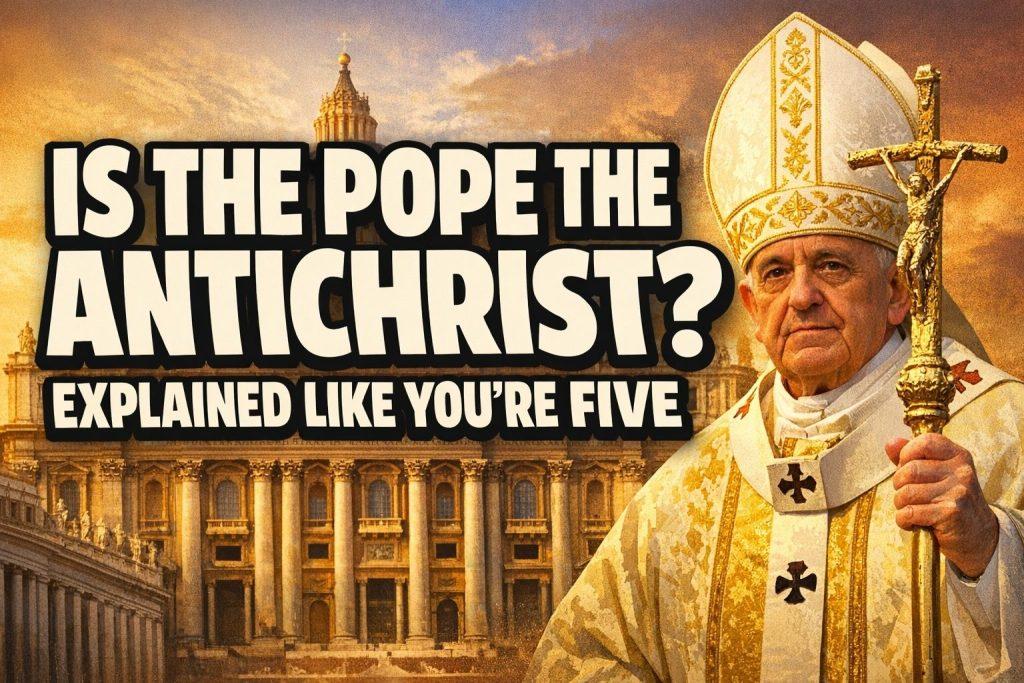
- The claim that the Pope is the Antichrist is a very old accusation, but the Catholic Church teaches clearly that it is false and based on serious misreadings of Scripture.
- The word “antichrist” appears in the Bible only in the Letters of Saint John, and it does not describe a single future world ruler but anyone who denies that Jesus is the Christ.
- The idea that the Pope is the Antichrist became popular during the Protestant Reformation in the sixteenth century, but serious Protestant scholars today largely reject this interpretation.
- The Bible teaches that the Church founded by Jesus will last until He returns, and a Church whose leader is the Antichrist could not have produced the saints, martyrs, and spiritual fruits that the Catholic Church has produced for two thousand years.
- Many of the Biblical texts used to argue that the Pope is the Antichrist actually describe figures in the first century who had nothing to do with the papacy.
- Catholics can respond to this accusation with patience and clarity, knowing that the charge collapses when the Biblical texts are read honestly and in their proper historical and literary context.
Where This Claim Comes From
The accusation that the Pope is the Antichrist is one of the most persistent and widespread anti-Catholic charges in the history of Christianity, and Catholics who encounter it for the first time are often surprised to learn how old and how theologically specific it is. The charge did not originate casually or randomly. It grew out of a specific theological and polemical tradition that took shape during the Protestant Reformation of the sixteenth century, when reformers like Martin Luther, John Calvin, and their followers were engaged in a total rupture with the Roman Catholic Church and needed to explain theologically why they believed the Church in Rome had become so deeply corrupt. Luther, who had initially spoken of the papacy in more measured terms, eventually concluded that the Pope was the Antichrist prophesied in Scripture, and he stated this position repeatedly and forcefully in his writings, describing the Roman papacy as the seat of the Antichrist and the Pope as the man of lawlessness described by Saint Paul. Calvin and other Reformed theologians followed suit, and the identification of the papacy with the Antichrist became embedded in several Protestant confessional documents of the sixteenth and seventeenth centuries, including the Westminster Confession of Faith of 1647, which stated plainly that the Pope is “that Antichrist, that man of sin, and son of perdition” described in Scripture. This historical origin is important for understanding the charge fairly, because it tells us that the accusation arose not from cool, detached Biblical scholarship but from the heat of a historical conflict in which both sides were making the strongest possible case against the other. It also tells us that the charge is primarily a phenomenon of a specific era and a specific Western Christian controversy, not a perennial and universal Biblical conclusion reached independently by careful readers across different times and places. The Catechism of the Catholic Church, while not addressing the anti-Catholic polemics of the Reformation directly, teaches clearly that the Pope, as the successor of Saint Peter, exercises the ministry of unity and oversight that Christ entrusted to Peter for the benefit of the whole Church (CCC 882).
What the Bible Actually Says About the Antichrist
One of the most important steps in responding to the claim that the Pope is the Antichrist is to ask what the Bible itself actually says about the antichrist, because many people who use this term assume it refers to a specific, clearly described figure of enormous power and evil who will arise at the end of history, and they then look for someone to fit that role. The reality of what the New Testament actually teaches about the antichrist is considerably more specific and considerably more modest than this popular assumption suggests. The word “antichrist” appears in the New Testament only four times, and all four occurrences are in the Letters of Saint John, specifically in his First and Second Letters. It never appears in the Book of Revelation, which is the Biblical text most people associate with apocalyptic figures. It never appears in the Gospels. It never appears in Paul’s letters. When Saint John uses the term, he uses it in a specific and theologically precise way that is quite different from the popular image of a single end-times tyrant. In his First Letter, John writes: “Children, it is the last hour; and as you have heard that antichrist is coming, so now many antichrists have come; therefore we know that it is the last hour” (1 John 2:18). John’s own explanation of what an antichrist is comes immediately after: “Who is the liar but he who denies that Jesus is the Christ? This is the antichrist, he who denies the Father and the Son” (1 John 2:22). In his Second Letter, John writes: “For many deceivers have gone out into the world, men who will not acknowledge the coming of Jesus Christ in the flesh; such a one is the deceiver and the antichrist” (2 John 1:7). The Biblical antichrist, then, is specifically and precisely defined as anyone who denies that Jesus is the Christ, meaning the Son of God who came in the flesh. The Pope, whatever one thinks of the institution of the papacy, has never denied that Jesus is the Christ. Every Pope in history has professed Jesus as the Son of God, the second Person of the Holy Trinity, born of the Virgin Mary, crucified, dead, buried, and risen from the dead.
The “Man of Lawlessness” in 2 Thessalonians
The primary Pauline text used to support the claim that the Pope is the Antichrist comes from Saint Paul’s Second Letter to the Thessalonians, where he writes about a figure he calls “the man of lawlessness” or “the man of sin,” described as one who “opposes and exalts himself against every so-called god or object of worship, so that he takes his seat in the temple of God, proclaiming himself to be God” (2 Thessalonians 2:3-4). Reformers who identified the Pope as the Antichrist read this passage as a description of the papacy, arguing that the Pope’s claims to supreme authority in the Church constituted a self-exaltation to divine status. Understanding this passage correctly requires attending to both its historical context and its literary content with care and honesty. Paul wrote this letter to the Christian community in Thessalonica around 50 AD, less than twenty years after the Resurrection of Jesus, to address their anxiety about the second coming of Christ. The “temple of God” in which this figure seats himself was a phrase that would have called to mind, for Paul’s first-century Jewish-Christian readers, the literal Jerusalem Temple, which was still standing when Paul wrote those words and would not be destroyed until 70 AD. Many serious Biblical scholars, both Catholic and Protestant, have identified the man of lawlessness with figures from the first century, including the Roman Emperor Nero, who persecuted Christians ferociously, or the emperor Caligula, who attempted to have a statue of himself erected in the Jerusalem Temple. The figure Paul describes commits the specific offense of claiming to be God, which no Pope in history has ever done. The Popes have claimed to be the successors of Saint Peter and to exercise his ministry of leadership and teaching, but they have consistently identified themselves as servants of God rather than as God Himself. The Catechism teaches that the Pope exercises his ministry in service to the unity of the Church and in fidelity to the deposit of faith entrusted to the apostles (CCC 891).
The “Whore of Babylon” in the Book of Revelation
Another Biblical text frequently cited in support of the claim that the Pope or Rome is the Antichrist comes from the Book of Revelation, specifically the vision of the “great harlot” or “whore of Babylon” seated on many waters and on a scarlet beast, described as “the great city that has dominion over the kings of the earth” (Revelation 17:18). Anti-Catholic interpreters have long identified this figure with the city of Rome and the woman with the Catholic Church or the papacy, seeing in the vision a condemnation of Rome’s religious and political power. Reading this passage correctly requires understanding the genre of apocalyptic literature, meaning the highly symbolic form of writing that uses coded imagery, numbers, colors, and mythological figures to communicate theological truths to an audience under persecution, in a way that the persecuting authorities could not easily decode. The Book of Revelation was written during a period of Roman imperial persecution of Christians, most likely during the reign of the Emperor Domitian in the late first century, and its coded imagery would have been immediately recognizable to its original audience as references to Rome, to the emperor cult, and to the specific pressures facing Christians who refused to offer worship to the Roman gods. The identification of the great city with Rome is almost universally accepted by Biblical scholars, but this identification refers to the pagan imperial Rome of the first century that was actively persecuting Christians, not to Christian Rome or the Catholic Church that would later establish itself in that same city. The seven hills on which the woman sits (Revelation 17:9) are the seven hills of Rome, but the Rome of Domitian and Nero, not the Rome of Peter and Paul and their successors. Applying this vision to the modern papacy requires a reading so forced and so disconnected from the text’s original context that it collapses under basic scholarly scrutiny. The Catechism teaches that the Book of Revelation must be interpreted within the tradition of the Church and in light of its historical context (CCC 117).
The Historical Peter and the Foundation of the Papacy
To evaluate the claim that the Pope is the Antichrist fairly, one must also understand what the Catholic Church actually teaches about the papacy and where it believes the institution comes from, because the charge of antichristhood implies that the papacy is a corruption or a counterfeit of something authentic, and assessing that requires knowing what the Church claims to have received from Christ. The Catholic Church teaches that Jesus Christ Himself founded the papacy when He said to Simon Peter at Caesarea Philippi: “You are Peter, and on this rock I will build my Church, and the gates of hell shall not prevail against it. I will give you the keys of the kingdom of heaven, and whatever you bind on earth shall be bound in heaven, and whatever you loose on earth shall be loosed in heaven” (Matthew 16:18-19). This passage, which no serious scholar doubts belongs to the original Gospel of Matthew, gives Simon a new name, which in the Greek is “Petros,” meaning rock, and promises to build the Church upon this rock. Jesus also gives Peter the keys of the kingdom, an image drawn from Isaiah chapter twenty-two where the keys of the royal household represent supreme authority delegated by the king to his chief steward. The risen Jesus then specifically commissions Peter to care for His flock: “Feed my lambs. Tend my sheep. Feed my sheep” (John 21:15-17), a threefold commission that the tradition has always read as the establishment of Peter’s specific pastoral leadership over the whole community. Peter consistently exercises a leadership role in the Acts of the Apostles, speaking on behalf of the community at Pentecost, presiding at the Jerusalem Council, and being the first apostle to receive the Gentile Cornelius into the Church. The Catholic Church traces the unbroken succession of bishops of Rome from Peter to the present day, and this historical continuity is one of the grounds on which it identifies the Pope as Peter’s legitimate successor. The Catechism teaches that the Church recognizes that this promise extends to Peter’s successors, the bishops of Rome, who exercise the Petrine ministry in every generation (CCC 881).
What the Antichrist Teaching Actually Requires
The claim that the Pope is the Antichrist is not merely an emotional accusation or a rhetorical insult. It is a theological claim that carries specific logical requirements, and examining those requirements against the historical and theological record reveals how difficult the claim is to sustain. If the Pope is the Antichrist, then the Antichrist must be someone who denies that Jesus is the Christ, as Saint John defines him. No Pope in the two-thousand-year history of the Church has denied that Jesus is the Christ. Every single Pope, from Peter in the first century to the present day, has professed faith in Jesus as the Son of God, the Messiah, the Savior of the world. If the Pope is the Antichrist, then the Antichrist must be someone who denies the Incarnation, meaning that God became flesh in Jesus Christ, as Saint John specifies in his Second Letter. The Catholic Church’s Christological teaching, meaning its teaching about the person and nature of Jesus Christ, is among the most developed and rigorously orthodox in all of Christianity, affirming the full divinity and full humanity of Jesus, His birth from the Virgin Mary, His real death on the cross, and His bodily Resurrection with a precision and consistency that no other institution has matched. If the Pope is the Antichrist, then the fruits of his institution must be the fruits of the Antichrist: deception, corruption of souls, apostasy from the true faith, and separation from God. But the Catholic Church has produced an extraordinary number of canonized saints across every century, including many martyrs who died rather than deny the faith, as well as great missionaries, theologians, artists, and servants of the poor whose lives bear unmistakable witness to the power of God’s grace. Jesus Himself taught that a tree is known by its fruits (Matthew 7:17), and the fruits of the Catholic Church across twenty centuries are simply incompatible with the claim that its leadership is the seat of the Antichrist. The Catechism teaches that the sanctity of the Church is the sanctity of Christ communicated through the sacraments and the moral life of the faithful (CCC 823).
The Role of Anti-Catholic Prejudice in This Claim
Fairness to the history of this accusation requires acknowledging that it has often functioned less as a serious theological argument and more as a tool of religious and political hostility, and that separating genuine theological concern from cultural prejudice is essential for engaging the question honestly. The Protestant Reformation occurred in a context of enormous political as well as religious conflict, and the identification of the papacy with the Antichrist served not just as a theological critique but as a powerful rallying cry that legitimized political rebellion against Catholic rulers and ecclesiastical authorities. In England, for example, the equation of the Pope with the Antichrist was written into official religious documents and taught in schools and universities for generations, creating a cultural climate of anti-Catholicism that shaped British and later American culture in ways that persisted long after the specific theological debates that generated it had faded from popular awareness. The virulent anti-Catholicism of the nineteenth and early twentieth centuries in the United States drew heavily on this tradition, producing popular literature, political cartoons, and social discrimination against Catholic immigrants that cast the Church as a fundamentally sinister and anti-democratic institution, with the Pope as its tyrannical head. Most serious Protestant theologians today, including those who maintain strong theological disagreements with Catholic teaching on various points, reject the identification of the Pope with the Antichrist as historically irresponsible and theologically indefensible. The major ecumenical dialogues between Catholics and Lutherans, Methodists, and Reformed Christians over the past sixty years have produced documents acknowledging that the polemical excesses of the Reformation period on both sides require repentance and correction. The Catechism affirms the Church’s commitment to ecumenism, meaning the sincere effort to restore full unity among all Christians, and it acknowledges that division among Christians contradicts the will of Christ and scandalizes the world (CCC 820).
How the Church Fathers and Early Christians Understood Antichrist
Looking at how the earliest Christians, including the Church Fathers who were closest in time to the apostles themselves, understood the concept of the antichrist provides further important perspective on whether the papacy could plausibly fit any serious Biblical definition of the term. The Church Fathers wrote extensively about the antichrist in the context of addressing the various heresies and apostasies that were threatening Christian communities in the second, third, and fourth centuries, and their understanding of the term is consistently faithful to John’s definition. Saint Irenaeus of Lyon, writing in the second century, described the antichrist as a specific individual who would arise at the very end of history, deny the Incarnation of God in Jesus Christ, and demand worship for himself. Irenaeus could not possibly have been thinking of the Bishop of Rome when he wrote this, since the authority of the Roman see was not yet exercised in the form it would later take, and Irenaeus himself was in communion with the Roman church and cited its apostolic tradition as a source of doctrinal authority. Tertullian, writing in the early third century, associated the figure of the “man of lawlessness” in Paul’s letter with the Roman Empire rather than with the Church of Rome, arguing that it was the imperial power of Rome that was restraining the emergence of the final antichrist rather than enabling it. Saint Augustine, in his great work “The City of God,” discussed the various interpretations of the end-times prophecies with characteristic nuance, refusing to fix on any single interpretation and warning against the dangers of excessive specificity in applying prophetic texts to particular historical figures. None of these Fathers, all of whom wrote centuries before the Protestant Reformation, showed any tendency to identify the Bishop of Rome with the figure of the antichrist. Their unanimous witness is that the antichrist is someone who denies Christ, not someone who confesses Him and leads an institution that has proclaimed His name for two thousand years.
Protestant Scholars Who Have Rejected This Claim
The identification of the Pope as the Antichrist has been rejected not only by Catholic theologians but by a substantial and growing number of serious Protestant Biblical scholars, and this convergence of non-Catholic scholarly opinion is significant for anyone who approaches the question honestly. The Westminster Confession of Faith, which originally contained the specific identification of the Pope with the Antichrist in its twenty-fifth chapter, has been revised by many Presbyterian and Reformed denominations to remove this identification, acknowledging that it cannot be sustained by responsible Biblical scholarship. Prominent twentieth-century Protestant theologians including Karl Barth, Oscar Cullmann, and G.K. Beale, while maintaining significant theological disagreements with Catholic teaching, did not endorse the identification of the papacy with the Biblical antichrist figures. Evangelical Biblical scholars who specialize in New Testament apocalyptic literature, including N.T. Wright, whose scholarly and popular writings on Revelation and Pauline eschatology are widely respected among non-Catholic readers, consistently read the man of lawlessness in 2 Thessalonians and the beast figures in Revelation in their first-century context rather than as references to the medieval or modern papacy. The ecumenical movement of the twentieth century, which brought Catholic and Protestant theologians into sustained and serious dialogue for the first time since the Reformation, produced among its fruits a generally shared scholarly agreement that the polemical Biblical exegesis, meaning the Biblical interpretation used for argumentative purposes, of the Reformation era requires significant correction and that the identification of the papacy with the Antichrist is one of the clearest examples of that exegesis at its worst. The fact that serious Protestant scholars across multiple traditions now largely reject this claim does not prove that Catholic teaching about the papacy is correct, but it does demonstrate that the charge of the Pope being the Antichrist cannot be sustained even from outside the Catholic tradition on the basis of honest engagement with the Biblical text.
The Papacy’s Consistent Proclamation of Christ
One of the most practically decisive arguments against the claim that the Pope is the Antichrist is simply the consistent and centuries-long record of the papacy’s proclamation of Jesus Christ as Lord, Savior, Son of God, and the only way to the Father. The very definition of an antichrist, as Saint John gives it, is someone who denies Christ or denies that Jesus came in the flesh. The papacy, across its entire history, has done precisely the opposite. The Pope speaks at every public appearance in the name of Jesus Christ. Every papal document, from ancient letters to modern encyclicals, meaning formal teaching letters addressed to the whole Church, opens and closes with references to Jesus Christ and derives its authority from the commission Christ gave to Peter. The great Christological councils of the early Church, which defined with precision what Christians must believe about the Person of Jesus, were convened or confirmed by the Bishop of Rome acting in his capacity as the successor of Peter. The Council of Nicaea in 325, the Council of Ephesus in 431, the Council of Chalcedon in 451, and the other great councils all produced their definitive statements about the full divinity and full humanity of Jesus Christ with the involvement and ratification of the Roman see. When the Arian heresy, which denied the full divinity of Christ, spread through the Christian world in the fourth century, the Bishop of Rome consistently opposed it and upheld the Nicene faith. When the Nestorian heresy, which compromised the unity of Christ’s Person, threatened the Church in the fifth century, it was condemned at Ephesus with the active support of the Roman see. If the papacy is the seat of the Antichrist, whose defining characteristic is the denial of Christ, then the Antichrist has spent two thousand years defending the faith in Christ against every heresy that has attacked it, which is simply incoherent. The Catechism teaches that the Roman Pontiff, by virtue of his office as the Vicar of Christ, possesses supreme authority over the universal Church and exercises it in the service of the one faith in Jesus Christ (CCC 882).
The Lives of the Saintly Popes
A further consideration that weighs heavily against the claim that the Pope is the Antichrist is the sheer number of popes whose personal holiness has been recognized by the Church through canonization or beatification, meaning the formal declarations that a person is certainly in Heaven and worthy of the faithful’s veneration and imitation. The Church has canonized dozens of popes as saints, from Saint Linus and Saint Anacletus in the first century through Saint Leo the Great in the fifth, Saint Gregory the Great in the sixth, and many others in the centuries following. The early popes, many of whom died as martyrs rather than deny the faith of Christ under Roman persecution, are among the most compelling refutations of the antichrist accusation imaginable. Saint Clement of Rome, the third successor of Peter, wrote a letter to the church in Corinth around 96 AD that is one of the earliest non-Biblical Christian documents to survive, and it breathes the authentic spirit of pastoral care, Christological faith, and apostolic authority that the Catholic tradition has always claimed for the papacy. Saint Leo the Great, whose theological letter known as the Tome of Leo settled the great Christological controversy of the fifth century by clearly affirming the two natures of Christ in one Person, is one of the most important doctrinal voices in the history of the early Church, and his contribution to orthodox Christology, meaning the correct understanding of who Christ is, is recognized by both Catholic and non-Catholic scholars. Pope Saint John Paul II, canonized by Pope Francis in 2014, spent his entire pontificate in ceaseless proclamation of the Gospel of Jesus Christ, traveling to every corner of the world, writing extensively on the person of Christ and the dignity of the human person made in His image, and enduring assassination attempts and personal suffering with a patience and serenity that bore every mark of genuine holiness. The holiness of many popes is not a proof of papal infallibility in every matter, but it is a powerful witness that the papacy is not the instrument of the Antichrist.
How Catholics Should Respond to This Accusation
Catholics who encounter the accusation that the Pope is the Antichrist, whether from Protestant neighbors, online debates, or evangelical tracts, do well to respond with patience, charity, and intellectual confidence rather than with defensiveness or hostility. The accusation, while false, comes from people who have often been sincerely taught this interpretation and who genuinely believe they are defending the truth of Scripture against a dangerous error, and treating them with respect and taking their question seriously is both the charitable and the most effective response. The first practical step is to ask what Biblical texts the person is relying on and then to engage those texts honestly and specifically, because the charge of the Pope being the Antichrist depends entirely on a handful of texts that, when read carefully and in context, do not support the interpretation claimed for them. The second step is to draw attention to Saint John’s own definition of the antichrist, since John is the only New Testament writer who actually uses the term, and to ask whether the Pope fits John’s definition of one who “denies that Jesus is the Christ” and “will not acknowledge the coming of Jesus Christ in the flesh” (2 John 1:7). The third step is to point gently to the historical track record of the papacy’s proclamation of Christ and its consistent defense of orthodox Christology against the heresies that sought to deny it. The fourth step is to acknowledge honestly that the Catholic Church has had popes who were personally sinful, even gravely so, and that the Church herself has always acknowledged this reality, pointing out that the Catholic doctrine of papal infallibility is a very limited and specific claim about the Pope’s teaching authority in formal definitions of faith and morals, not a claim that every Pope is personally holy or incapable of error in every statement he makes. The Catechism teaches that the faithful, guided by the Magisterium of the Church, can engage serious theological questions with confidence, knowing that the Holy Spirit guides the Church into all truth (CCC 92).
The Doctrine of Papal Infallibility — What It Actually Means
One of the main sources of the accusation that the Pope is the Antichrist is a profound misunderstanding of what the Catholic doctrine of papal infallibility actually teaches, and clarifying this misunderstanding is essential for honest dialogue about the papacy. Many people who make the Antichrist accusation believe that the Pope claims to be personally sinless, to speak infallibly on every topic, to be exempt from all accountability, or to exercise an absolute and unlimited divine authority that usurps the place of God. None of these things is what the Catholic Church actually teaches. The doctrine of papal infallibility, formally defined at the First Vatican Council in 1870, holds the very specific and carefully limited teaching that when the Pope speaks ex cathedra, meaning formally and explicitly from his apostolic chair, on a matter of faith or morals, addressing the whole Church and intending to bind the whole Church to a definitive teaching, he is preserved from error by the Holy Spirit. This protection applies to a remarkably small number of formal, solemn definitions across the entire history of the Church, and it does not apply to the Pope’s personal opinions, his political judgments, his theological speculations, or his ordinary letters and speeches. The doctrine says nothing about the Pope’s personal holiness or the absence of personal sin, and the Church has never claimed that every Pope has been a good man, let alone a holy one. Some Popes in history behaved scandalously, and the Church’s own historians have documented this without embarrassment, because the Catholic claim is not that the Church is made up of perfect people but that the Holy Spirit protects the Church’s definitive teaching from error. The Catechism presents papal infallibility as a charism, meaning a specific gift of the Holy Spirit, given not for the personal benefit of the Pope but for the service of the whole people of God, ensuring that the deposit of faith entrusted to the apostles is faithfully preserved and handed on (CCC 891).
The Gates of Hell and the Church’s Endurance
One of the most powerful arguments against the claim that the Pope is the Antichrist comes from the Church’s own survival and continuity across twenty centuries of history. Jesus promised Peter: “The gates of hell shall not prevail against it” (Matthew 16:18), referring to the Church He was building on the rock of Peter’s faith and leadership. This promise is either true or it is not. If it is true, then the Church that Jesus built on Peter cannot be overthrown, corrupted to its foundations, or transformed into the instrument of the Antichrist, because the Antichrist’s agenda is precisely to overthrow the Church of Christ and to replace genuine faith with its counterfeit. If the papacy itself, the very institution Jesus established to serve as the foundation of the Church’s unity, has become the Antichrist, then the gates of hell have prevailed against the Church and Jesus’ promise has proven empty. But this conclusion is incompatible with a serious reading of the New Testament, which presents the promises of Jesus as completely reliable. The alternative reading, which the Catholic Church proposes, is that Jesus’ promise has been kept across twenty centuries of genuine historical difficulty, that the Church built on Peter has endured through persecution, schism, heresy, the personal failings of some of its leaders, and every external and internal attack, and that this endurance is itself one of the evidences that the Holy Spirit has been doing exactly what Jesus promised He would do. No purely human institution has survived the pressures that the Catholic Church has survived while maintaining the essential continuity of its faith and structure. The missionary expansion of the Church to every people and culture on earth, the consistent proclamation of the Gospel, the production of saints in every century, and the preservation of the full deposit of the apostolic faith through two thousand years of turbulent history are all incompatible with the hypothesis that the Church’s central institution is the seat of the Antichrist. The Catechism teaches that the Church is indefectible, meaning she cannot fail in her essential mission, because she is sustained by Christ’s promise and the Holy Spirit’s continual guidance (CCC 869).
The Ecumenical Dimension — Moving Beyond Old Accusations
The question of whether the Pope is the Antichrist is not only a Biblical and historical question. It is also an ecumenical question, meaning a question about the relationship between Catholic Christians and other Christians, and the way it is answered has consequences for the possibility of genuine Christian unity. The accusation, when maintained and propagated, creates a fundamental barrier to any honest dialogue between Catholics and Protestants, because no meaningful conversation can take place between people one of whom believes the other’s spiritual leader is literally the Antichrist. The Second Vatican Council’s Decree on Ecumenism, Unitatis Redintegratio, acknowledged that Christians of different traditions are genuinely united by their baptism and their shared faith in Jesus Christ, and that this real though imperfect unity calls all Christians to work toward the full unity that Christ wills for His Church. Pope Saint John Paul II extended this ecumenical spirit in his encyclical Ut Unum Sint, “That They May Be One,” which acknowledged the sins and failures of Catholics in the history of Christian division and invited all Christians to a renewed commitment to the search for unity. These ecumenical efforts would be simply incoherent if the Pope were genuinely the Antichrist, since no serious Christian could engage in ecumenical dialogue with the Antichrist. The willingness of the Catholic Church to engage in honest, patient, and theologically serious dialogue with Protestant, Orthodox, and Anglican communities across the past sixty years, and the genuine fruits that this dialogue has produced in the form of shared theological statements on justification, baptism, the Eucharist, and the ministry of the Church, are themselves witnesses that the papacy is doing the work of Christ’s servant rather than the work of His adversary. The Catechism teaches that the restoration of unity among all Christians is one of the principal concerns of the Second Vatican Council and of the whole Church (CCC 820).
What This All Means for Catholics and for Honest Seekers
The accusation that the Pope is the Antichrist, examined carefully, honestly, and in the light of the Biblical texts it claims to be based on, does not hold up under scrutiny. The Biblical term “antichrist” belongs exclusively to the Letters of Saint John, and Saint John defines it with great precision as anyone who denies that Jesus is the Christ or denies that Jesus came in the flesh. The Pope has never denied either of these things, and the Catholic Church’s two-thousand-year record of defending the full divinity and full humanity of Jesus Christ against every heresy that has attacked it places the papacy at the farthest possible remove from Saint John’s definition of an antichrist. The other texts frequently cited in support of the accusation, Paul’s description of the man of lawlessness and John’s vision of the whore of Babylon in Revelation, address first-century figures and situations that had nothing to do with the Roman papacy as an institution. When these texts are read in their historical and literary context rather than being wrenched out of that context to serve a polemical purpose, their meaning becomes clear and their inapplicability to the modern papacy becomes equally clear. Catholics who understand these things can engage the accusation with complete theological confidence, knowing that the charge rests on misreadings of Scripture that even many Protestant scholars today reject. The papacy is not perfect, and no Catholic claims that it is. Some popes have been poor leaders, some have been sinful men, and some have caused genuine harm to the Church and to the world through their failures. The Catholic Church acknowledges this history honestly. But a flawed human institution whose members and leaders have sometimes failed does not thereby become the seat of the Antichrist, any more than a flawed and sometimes faithless Israel ceased to be the covenant people of God because of the sins of its kings and priests. God works through imperfect human vessels, and the history of the papacy is ultimately the history of Christ’s promise keeping itself true through human weakness, which is one of the most authentically Biblical stories one could tell.
⚠ Disclaimer: This article presents Catholic teaching for educational purposes only. The content shared on CatholicAnswers101.com is intended to inform and support the faithful in their understanding of the Catholic faith, and does not constitute official Church teaching or magisterial authority. For authoritative and official Church teaching, we encourage readers to consult the Catechism of the Catholic Church and relevant magisterial documents. For personal spiritual guidance, pastoral advice, or matters of conscience, please consult your parish priest or a qualified spiritual director. For any questions, corrections, or inquiries regarding the content on this site, please contact us at editor@catholicanswers101.com.